The Short Leash #184, September 1
The Short Leash #184
September 1, 2026
The healthiest dogs aren't supported by a single therapy, supplement, or food; they thrive when every aspect of their care works together. In this edition of Short Leash, we explore the growing shift toward a more integrative view of canine health, where movement, nutrition, the microbiome, behavior, and the human-animal bond all play important roles in lifelong wellness. From research on exercise and cognitive health to emerging perspectives on Traditional Chinese Veterinary Medicine food therapy, hemp and the gut microbiome, and the importance of preserving muscle as dogs age, this issue highlights how small, thoughtful choices can have a lasting impact. As always, our goal is to help you look beyond the headlines, think critically about new research, and better understand the science and traditions that continue to shape the future of canine health.

Movement Is Medicine
Exercise is more than just a way to burn calories—it may be one of the best therapies we have for dogs with osteoarthritis. A new study found that dogs participating in a structured five-week rehabilitation program experienced measurable improvements in joint mobility and thigh muscle mass, even though their body weight changed very little. The findings reinforce the growing consensus that osteoarthritis is best managed with a multimodal approach that includes therapeutic exercise, weight management, nutrition, pain control, and rehabilitation rather than medication alone. For us, one of the biggest takeaways is that preserving muscle may be just as important as reducing pain. That's why we emphasize monitoring both Body Condition Score (BCS) and Muscle Condition Score (MCS), because healthy muscles help support healthy joints and improve quality of life as dogs age.

Can Hemp Improve Your Dog's Gut Health?
Maybe, but we're not there yet. A new 90-day study found that adding hempseed oil or hempseed by-products to dog food altered the gut microbiome, increasing bacterial diversity and promoting several bacterial groups often associated with intestinal health. While these findings are encouraging, the researchers did not measure whether the dogs actually experienced better digestion or improved gastrointestinal health. The study adds to growing evidence that dietary ingredients can influence the microbiome, but it's an important reminder that changes in bacterial populations don't automatically translate into better clinical outcomes. More research will be needed before we know whether hemp should become a routine ingredient for digestive health.

Can an Active Lifestyle Help Keep Your Dog's Mind Sharp?
A new study of 858 senior dogs found that dogs who participated in sports or regularly engaged in activities with their owners throughout life had significantly lower scores for canine cognitive decline than less active dogs. The benefits were seen across breed types, with toy breeds and mixed breeds appearing to gain the most from regular shared activities. While this observational study cannot prove that exercise prevents cognitive dysfunction, it adds to growing evidence that keeping dogs physically active and mentally engaged may help support healthy brain aging. Whether it's hiking, agility, scent work, swimming, or simply enjoying regular adventures together, an active lifestyle may be one of the most valuable investments you can make in your dog's long-term health and quality of life.

Go Ahead, Talk to Your Dog
If you've ever caught yourself having a full conversation with your dog, science says you're in good company. A recent psychology article highlights research suggesting that people who talk to their pets often exhibit empathy, emotional awareness, and a strong desire to connect with others. While dogs may not understand every word we say, decades of canine cognition research have shown they are remarkably skilled at interpreting our tone of voice, facial expressions, gestures, and routines. In other words, those daily conversations may strengthen the human-animal bond just as much as they help us express affection. So go ahead and tell your dog about your day; they're probably paying more attention than you think.

Family by Choice
It's no surprise to most dog lovers, but a recent survey found that 95% of pet owners consider their pets to be members of the family. That deep bond has transformed nearly every aspect of canine care, from the foods we feed to the medical care we seek and the experiences we share with our dogs. While treating dogs like family has led many owners to invest more in their health and well-being, it's also a good reminder that loving our dogs doesn't mean treating them like small humans. Dogs thrive when we respect their unique biology, behavioral needs, and species-appropriate nutrition. Perhaps the greatest gift we can give our canine family members is not humanization, but understanding them for who they truly are.

Are Dog Owners Rethinking Popular Breeds?
A recent VIN News report highlights a shift in the popularity of dog breeds around the world. While registrations of flat-faced breeds such as French Bulldogs, Pugs, and Bulldogs have declined in several countries due to growing awareness of their health challenges, the United States continues to see strong demand for these breeds. At the same time, Dachshunds have climbed into the top five most popular breeds in the U.S. for the first time in more than two decades. Breed popularity often follows social trends, but this report reminds us that choosing a dog should involve more than appearance or popularity. Understanding a breed's inherited health risks, exercise needs, temperament, and expected lifespan can help families make choices that benefit both the dog and the people who love them.

When Your Dog's Food Is Recalled
Pet food recalls can be alarming, but they don't necessarily mean your dog will become ill. If you discover that a food you've been feeding has been recalled, the first step is to stop feeding it and confirm that your specific product and lot number are affected. Save the packaging, including the lot number and expiration date, and contact your veterinarian if your dog has eaten the food or develops clinical signs such as vomiting, diarrhea, lethargy, or loss of appetite. Depending on the reason for the recall, your veterinarian may recommend monitoring your dog or performing diagnostic tests. This is also a good reminder to keep pet food in its original packaging or save the label, making it much easier to identify whether a product is included in a future recall.
Continue the Conversation on the Podcast
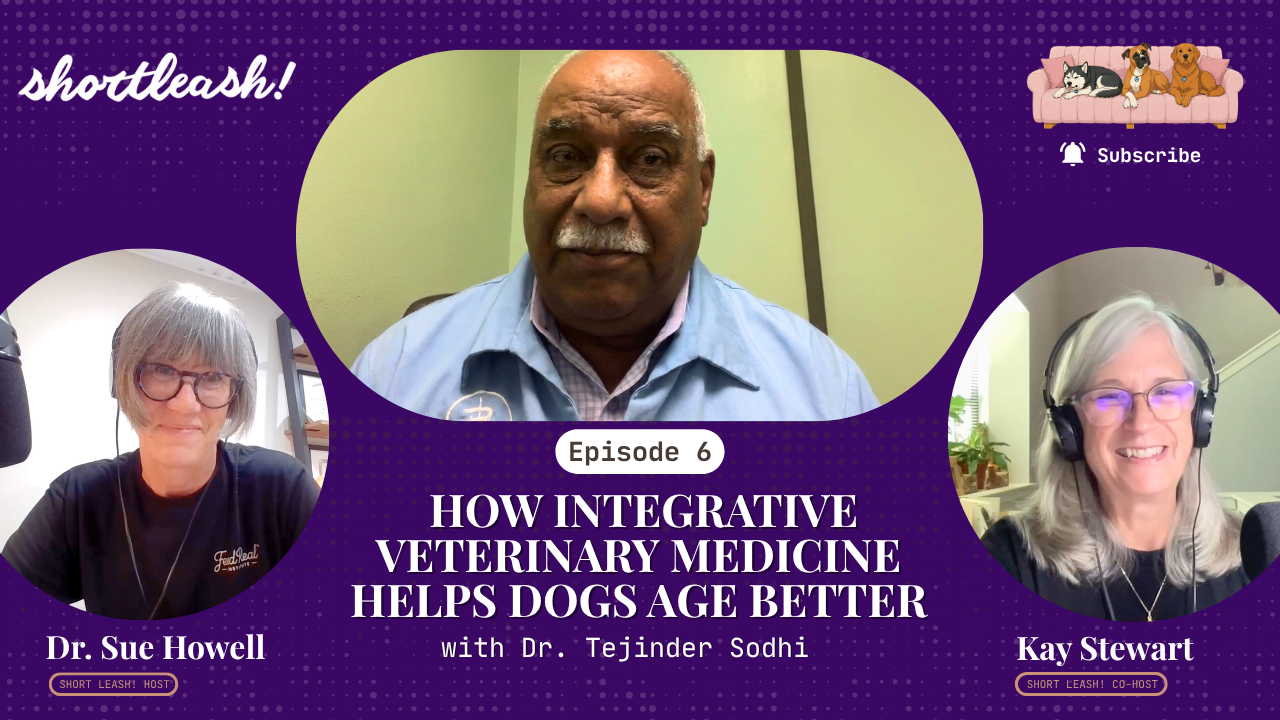
This week's Short Leash Podcast, releasing on Sept 6, 2026, continues the conversation with Dr. Tejinder Sodhi, one of the pioneers of integrative veterinary medicine. Dr. Sodhi brings together conventional veterinary medicine, rehabilitation, acupuncture, chiropractic care, nutrition, herbal medicine, Ayurveda, and Traditional Chinese Veterinary Medicine to help dogs achieve better health through a truly whole-body approach. Rather than treating isolated clinical signs, his work focuses on understanding how movement, pain, digestion, inflammation, nutrition, and lifestyle interact to influence long-term health and quality of life. Join us as we discuss why movement is medicine, how integrative therapies complement conventional care, and what every dog owner can do to support healthier, happier, and longer lives for their canine companions. We're also excited to welcome Dr. Sodhi as a featured speaker at the 2026 Feed Real Summit in San Diego.